
Rhode Island, despite being the smallest state, packs a punch when it comes to tales of dereliction and desolation. The abandoned places in Rhode Island echo with the whispers of the past, adding a mysterious allure to this coastal gem.
Rhode Island has decaying mills from its industrial years and empty mansions from its wealthy ones. The Ocean State holds a multitude of secrets in its forgotten nooks, beckoning urban explorers to come and unravel them.Note: Many of these locations are in an extremely delicate state. Specifics on locations, such as coordinates or maps, are not given. This is done so purposefully as a barrier to entry to those who may mean harm to these spots. I want to ensure that these abandoned places in Rhode Island are known about, but stay as vandalism and destruction free as possible. Remember: Take only photos, leave only footprints.
Breakdown: The Top 12 and More
If you have a specific location from the list below that you would like to immediately get more information about, click the links in the list to snap straight to that abandoned places in Rhode Island location.
- Ladd School (Exeter)
- Fort Wetherill (Jamestown)
- Pawtuxet Village (Warwick)
- Narragansett Pier Life Saving Station (Narragansett)
- Enchanted Forest (Hopkinton)
- Cranston Street Armory (Providence)
- Pettaquamscutt Cove Site (Narragansett)
- Majestic Theatre (East Greenwich)
- Providence River Crane (Providence)
- Windswept Ruins (Narragansett)
- Belcourt Castle (Newport)
- Memorial Hospital of Rhode Island (Pawtucket)
Broaden Your Horizons Beyond Rhode Island
Are you interested in venturing outside the state of Rhode Island? Maybe you live close to the state line, or maybe you’re just looking for adventures outside your home state. Whatever the case may be, here are some guides to bordering states that may be helpful in effective urban exploration:
Don’t Forget About Trespassing Laws
It is important when considering abandoned places in Rhode Island to know the basics of Rhode Island trespassing laws. Luckily, we have developed a massive guide to trespassing laws in all 50 states. For laws that specifically relate to Rhode Island, please click here.
Without any further ado, let’s hop into the list of abandoned places!
The Best Abandoned Places in Rhode Island
Ladd School (Exeter)

Hidden among the tranquil greenery of Exeter, Rhode Island, lies the haunting remnants of the Ladd School, an institution that carries a complex and often disturbing history. Founded in the early 20th century by Dr. Joseph Ladd, the facility originally intended to provide a safe haven and education for individuals with developmental disabilities.
However, as time passed, the institution’s ideals began to erode, and it became more of a custodial asylum, plagued by allegations of mistreatment and neglect.
Constructed with a grand design echoing the architectural style of the time, the Ladd School was an expansive complex composed of multiple buildings, each serving a different purpose. Among them were residential halls, an administrative building, a school, a hospital ward, and various other ancillary structures.
However, as public awareness grew concerning the rights and humane treatment of individuals with disabilities, the institution came under scrutiny. Stories began to surface of subpar living conditions and questionable practices, which eventually led to the Ladd School’s closure in the 1990s.
How Things Look Today
The Ladd School buildings are gone. Bulk demolition ran in August 2013 and was essentially finished in 2014, including the Fogarty Hospital, the last of the large structures. The 331-acre state campus now holds the Rhode Island Fire Training Academy, a Job Corps centre, the State Fire Marshal’s explosives division and a healthcare facility, with woods and a small memorial area over the rest. Many of the buildings have been demolished, but some structures still remain, gradually succumbing to the elements and the passage of time. Their weathered facades, broken windows, and overgrown surroundings present an eerie tableau that contrasts sharply with the serene Rhode Island countryside.
Located off Ten Rod Road, the abandoned site provides a somber exploration experience.
Fort Wetherill (Jamestown)
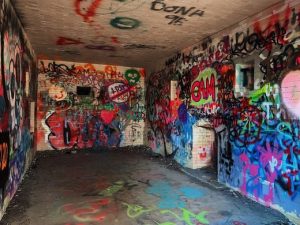
The fort, named in honor of Major General Alexander Wetherill, was a crucial defense post during the two World Wars, strategically overlooking the entrance to Narragansett Bay.
Fort Wetherill was constructed in the late 19th and early 20th centuries as part of the country’s coastal defense system. Its solid, granite and concrete structures, camouflaged by natural vegetation, once housed powerful artillery designed to thwart potential naval threats. Its main features included vast casemates for the guns, munition storage areas, plotting rooms, and numerous other military facilities, all tucked into the rugged terrain.
However, with the advent of modern warfare technology, the fort’s traditional defense mechanisms became obsolete. It was deactivated in the mid-20th century and later transferred to the state of Rhode Island. The site is not abandoned: it is now Fort Wetherill State Park, which is open to the public.
How Things Look Today
Today, Fort Wetherill is a state park, and it is the disused gun batteries inside it that look abandoned. Its grey, weathered structures, punctuated by the encroaching greenery, form a stark contrast against the backdrop of the sparkling Atlantic waters. While many of the structures are off-limits due to safety concerns, the exterior of the fort and the surrounding parklands offer a unique exploration experience.
While the fort’s echoing tunnels and vacant buildings evoke an eerie calmness, the area’s natural beauty provides an unexpected charm. The fort’s cliff-top location affords spectacular views of the bay, making it a popular spot for picnicking, hiking, and scuba diving.
As you traverse the fort’s expansive grounds, the remnants of its military past seem to blend seamlessly with the natural environment, lending the place an air of tranquil resilience. With its disused batteries left in place, Fort Wetherill continues to fascinate visitors with its blend of historical significance, architectural intrigue, and natural beauty.
Pawtuxet Village (Warwick)

Pawtuxet Village in Warwick, Rhode Island, is an inhabited neighbourhood that contains sections which feel like they have been frozen in time, echoing the whispers of the past. This historic village, one of the oldest in New England, dates back to the mid-17th century, founded by settlers who sought freedom from the rigid Puritan laws in Massachusetts.
Pawtuxet Village, with its deep roots in American history, was a bustling center of trade and commerce. It was also notably a central stage in King Philip’s War, a pivotal conflict between English colonists and Native Americans in the 17th century. The village thrived with water-powered mills lining the banks of the Pawtuxet River, establishing the region’s prominence in the textile industry during the Industrial Revolution.
However, with the decline of the textile industry in the 20th century and the impact of two devastating hurricanes in the 1930s and 1950s, certain areas of the village fell into decline. Some of the once-prosperous mills and factories were closed, leaving behind a faded echo of the village’s industrial vibrancy. The village itself is not abandoned: people live there, and it remains an active neighbourhood of Warwick.
How Things Look Today
Today, these abandoned structures, situated along the Pawtuxet River, stand as silent reminders of the village’s bustling past. The crumbling stone and brick facades, mottled with time, hold a haunting beauty. They present a sharp contrast to the restored areas of Pawtuxet Village, which continues to thrive with its charming array of historic homes, quaint shops, and scenic views of the river.
You can access Pawtuxet Village via Broad Street in Warwick. As you stroll through the village, the abandoned structures invite curiosity and reflection on the passage of time.
Narragansett Pier Life Saving Station (Narragansett)

The Narragansett Pier Life Saving Station in Narragansett, Rhode Island, stands as a silent sentinel to the bravery and selflessness of those who once operated it. The Station, constructed in the late 19th century, was a part of the United States Life-Saving Service, a precursor to the modern-day U.S. Coast Guard.
It was strategically located at the mouth of the Narragansett Bay, a historically treacherous area for maritime travel, to provide aid to those in peril on the sea.
The Station was built in the iconic Shingle-style architecture, typical of the Life Saving Service structures of the time. It featured a boat room, a watch room, and living quarters for the surfmen, who were stationed there around the clock to respond to emergencies. The men who served at the Narragansett Pier Station were renowned for their daring rescues in some of the worst New England weather, saving countless lives at great risk to their own.
However, with the merging of the Life Saving Service with the U.S. Coast Guard in 1915, and the advancement in rescue technology over the following decades, the Station became less critical. It was eventually decommissioned in the mid-20th century. The station is not abandoned today: the building has been restored.
How Things Look Today
Today, the Station stands in quiet solitude along the windswept shores of Narragansett Bay. The original design is still evident despite the weather, and the red roof and shingle exterior are faded. The abandoned Station, located near Ocean Road, evokes a sense of melancholic beauty as it overlooks the bay, its emptiness belying the intense activity and heroism it once housed.
The crews here watched the sea day and night. The Station, though quiet now, echoes with the tales of courage and dedication that are an integral part of Narragansett’s maritime history.Enchanted Forest (Hopkinton)
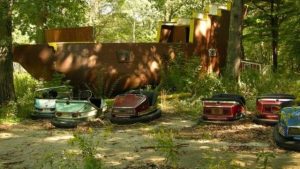
Tucked away in the quiet town of Hopkinton, Rhode Island, lies the enchantingly eerie remains of the Enchanted Forest. This was a family theme park. It is silent now.
The Enchanted Forest was opened in the early 1970s, its whimsical attractions and charming fairytale-themed displays drawing families from across the region. Modeled after the storybook parks of the era, it featured a host of colorful structures and playhouses, each representing a different fairytale or nursery rhyme. Children would delight in exploring Cinderella’s Castle, Mother Goose’s House, and the Three Little Pigs’ homes, while the more adventurous ones would dare to venture into the Witch’s Cave.
However, as the popularity of larger, high-thrill amusement parks grew, the Enchanted Forest began to lose its appeal. After changing hands several times in an attempt to revive its fortunes, the park eventually closed its doors in the early 2000s and was left to be reclaimed by nature.
How Things Look Today
Today, the park’s site off Route 3 in Hopkinton is a haunting tableau of faded memories and lost innocence. Overgrown foliage has enveloped the fairytale cottages, their once-bright paint peeling and weather-beaten. The rusted remnants of playground equipment stand in stark contrast to the lush greenery that has overtaken them.
Exploring the Enchanted Forest offers a poignant journey into a forgotten past, the crumbling structures and decaying playhouses evoking a sense of melancholy and reflection. Though its heyday is long gone, the park’s lingering spirit and the echoes of children’s laughter remind us of the simple joys of childhood and the transient nature of time.
Cranston Street Armory (Providence)
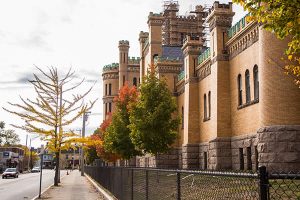
The Cranston Street Armory in Providence, Rhode Island, is a commanding presence, its immense red brick edifice and distinctive twin towers looming over the city’s west end. Yet, despite its imposing facade, this architectural gem has been largely abandoned for decades, standing as a silent sentinel to a time long past.
The armory was built in the early 20th century, a grand example of military Gothic Revival architecture designed by the renowned architectural firm William R. Walker & Son. It served as the primary base for the Rhode Island National Guard, its cavernous drill hall and myriad ancillary spaces bustling with military activity. However, by the late 20th century, the National Guard had largely relocated, leaving the armory largely vacant.
How Things Look Today
Today, the Cranston Street Armory, also known as the “Castle for the People,” stands mostly deserted, though its grandeur remains undiminished. The brickwork detailing, the turrets and the drill hall, large enough to fit a city block, show what the builders could do.
The building is located in the Armory District, off Cranston Street, its distinctive silhouette making it a prominent landmark. While the armory is not generally open to the public, its imposing exterior and its historical significance make it a must-visit for architecture enthusiasts and history buffs alike.
The state is looking at ways to repurpose the armory.Pettaquamscutt Cove Site (Narragansett)
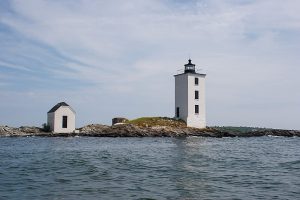
In the peaceful town of Narragansett, Rhode Island, sits the Pettaquamscutt Cove Site. Once a hub of maritime activity, it is not abandoned today: the cove is a protected wildlife refuge.
The Pettaquamscutt Cove Site, established in the late 17th century, was primarily a shipbuilding and maritime trade area due to its strategic location along the Narragansett Bay. Ships built from New England timber sailed from the cove and supported the region’s maritime economy. However, as the industry shifted and modern infrastructure developed, the cove’s prominence dwindled and it was eventually abandoned.
How Things Look Today
The Pettaquamscutt Cove Site is what is left of Narragansett’s shipbuilding. While the hustle and bustle of shipbuilding and maritime trade no longer resonate through the area, the site retains an aura of its former significance.The cove lies off Boston Neck Road. While the infrastructure related to its shipbuilding past is mostly gone, the cove itself, with its serene waters and surrounding landscape, is a calming site for explorers. Wildlife enthusiasts may spot various waterfowl and other creatures native to the region.
The Pettaquamscutt Cove Site may be largely forgotten, but it remains an integral piece of Rhode Island’s maritime history. Despite its quietude, the cove holds a historic charm that continues to enchant those who venture to this secluded spot.
Majestic Theatre (East Greenwich)

In its heyday, the Majestic Theatre was a buzzing hub of community activity. Patrons would flock to its opulent interiors, enticed by the flicker of the silver screen or the promise of a live performance.
However, as the century wore on and cinema complexes began to rise in popularity, smaller venues like the Majestic began to struggle. Despite valiant efforts to stay relevant, the theatre was eventually abandoned and closed its doors, a silent victim of changing times.
Located on Main Street in the heart of East Greenwich, the Majestic Theatre, though worn by time and neglect, still bears traces of its former grandeur. The marquee, now dimmed, once illuminated the street below with the names of plays and films. The building’s exterior, though faded, hints at the architectural design that once was considered state-of-the-art. The boarded-up box office that once sold countless tickets now stands as a poignant symbol of the theatre’s more prosperous days.
How Things Look Today
While its stage remains dark and its seats empty, the ghostly echoes of applause and cinematic magic linger in the air, a haunting tribute to East Greenwich’s rich cultural heritage.
Providence River Crane (Providence)
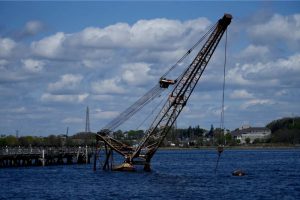
The Providence River Crane has been removed. Rhode Island DEM lifted it off its pedestal on 17 January 2025 and took out the sunken barge beneath it the same month, using a $1.5 million NOAA Marine Debris grant and pulling roughly 400,000 pounds of debris. The Steel Yard took the salvaged steel and the crane cab and is turning them into public artwork. The crane, an artifact from the early 20th century, was once integral to the city’s thriving maritime commerce, aiding in the transport and loading of goods onto waiting ships.
This hulking crane, with its sturdy steel arm reaching skyward and now-rusted gears frozen in time, was designed for the heavy-duty work of unloading cargo from the bustling harbor traffic. However, as shipping routes and methods evolved, the role of the crane was slowly diminished and ultimately deemed redundant. The crane was eventually abandoned, left to endure the elements and the passage of time.
How Things Look Today
Located on the riverside, not far from the heart of Providence, the crane offers a stark contrast to the city’s revitalized waterfront.
Although it no longer serves its original function, the Providence River Crane has become a prominent fixture in the city’s landscape. Its towering presence and antiquated form lend a distinct character to the otherwise modern skyline. For urban explorers and history enthusiasts, the crane offers a captivating glimpse into the city’s industrial past.
Windswept Ruins (Narragansett)
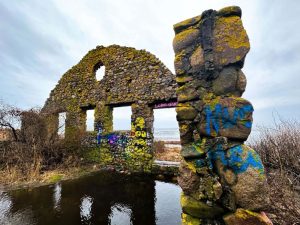
The Windswept Ruins sit on the coast at Narragansett, Rhode Island. These ruins are all that remain of the once magnificent Narragansett Pier Casino, a beloved social hub and architectural marvel that represented the gilded age of the late 19th century.
Built in 1883, the casino was the heart and soul of Narragansett, providing entertainment and social interactions for the wealthy summer crowd. A multifunctional venue, it included a theatre, a restaurant, a ballroom, and various sports facilities. However, a devastating fire in 1900 destroyed most of the casino, leaving only a portion of the structure standing, including the iconic stone towers.
How Things Look Today
Now known as the Windswept Ruins, this site has an ethereal beauty to it. The sturdy, stone towers rise against the Atlantic backdrop, worn by wind and waves yet standing resilient. The ruins, buffeted by the coastal winds, give a sense of the grandeur that once graced this spot.
Situated in the heart of the town, near the Narragansett Town Beach, the ruins are a beloved local landmark and are listed on the National Register of Historic Places.
For those with an interest in history and architecture, or a penchant for the romantic allure of ruins, the Windswept Ruins are a must-visit. As you explore this historical site, you can’t help but marvel at the passage of time and the resilience of these stone remnants that continue to weather the windswept coastal landscape of Narragansett.
Belcourt Castle (Newport)

Belcourt Castle, situated in the posh seaside city of Newport, Rhode Island, stands as a monument to the city’s Gilded Age, when America’s wealthiest families built grand mansions here as symbols of their status and wealth. It was originally constructed in the late 19th century for Oliver Hazard Perry Belmont, a wealthy socialite and politician.
This sprawling 60-room mansion was designed by the renowned architect Richard Morris Hunt in a combination of French Renaissance and Gothic styles. However, unlike the other Newport mansions that were used mainly for summer gatherings, Belmont made Belcourt his year-round residence, reflecting his unique style and eclectic tastes.
Following Belmont’s death, the mansion passed through several hands and fell into disrepair over time. For many years, it was abandoned and left to the mercy of the elements. The once grand halls and chambers were vacant, filled only with echoes of its past opulence. Its intricate architectural details and lavish decorations gradually succumbed to the effects of neglect.
How Things Look Today
Today, Belcourt Castle stands partially restored, thanks to a dedicated effort by its current owners. Parts of it are closed for restoration work. The rest is open.
Visitors can take a guided tour through the castle’s ornate rooms, each telling a story about its past residents and their lifestyle. Highlights include the grand hall with its stained glass windows, the library with its intricate woodwork, and the opulent ballroom that once hosted extravagant parties.
Memorial Hospital of Rhode Island (Pawtucket)

However, as the 21st century unfolded, the hospital began facing financial challenges that eventually led to its closure in 2017. Since then, the Memorial Hospital of Rhode Island has remained abandoned, its once-bustling halls and wards now filled only with silence.
How Things Look Today
Today, the exterior of the hospital presents a sobering sight, with its largely intact facade offering a stark contrast to the emptiness within. The hospital’s expansive complex, encompassing the main building and several other structures, stand like a deserted island in the urban surroundings.
As for the interior, while largely off-limits due to safety concerns, it speaks to the urgency and compassion that once filled the hospital. The vacant patient rooms, the deserted nurses’ station, and the empty operating theaters – all silent, yet echoing with the memories of their former use. The hospital, in its abandonment, stands as a potent symbol of a community healthcare institution that once was.
The future of the Memorial Hospital of Rhode Island remains uncertain. Several redevelopment plans have been proposed, but none have been put into action yet. For now, the hospital remains a silent fixture of Pawtucket – a building once integral to the city’s life, now waiting for a new chapter to begin.
Our Final Thoughts on Abandoned Places in Rhode Island
Those who are into urban exploration in the Rhode Island area should get comfortable with Rhode Island trespassing laws. Luckily, we have developed a massive guide to trespassing laws in all 50 states. For laws that specifically relate to Rhode Island, please click here.
For more about obtaining permission to explore abandoned places, check out our guide Explore Abandoned Buildings: How To Get Permission. Finally, if you are wanting to find more abandoned places in Rhode Island, check out my resource How To Find Abandoned Places With Google Maps.
Happy exploring!
- John Bourscheid, Killer Urbex